
The Bilingual Baby: Raising Kids With Two Languages
Will two languages confuse a baby? The short answer is no, and the long answer is that bilingualism is a gift with a small, temporary price.
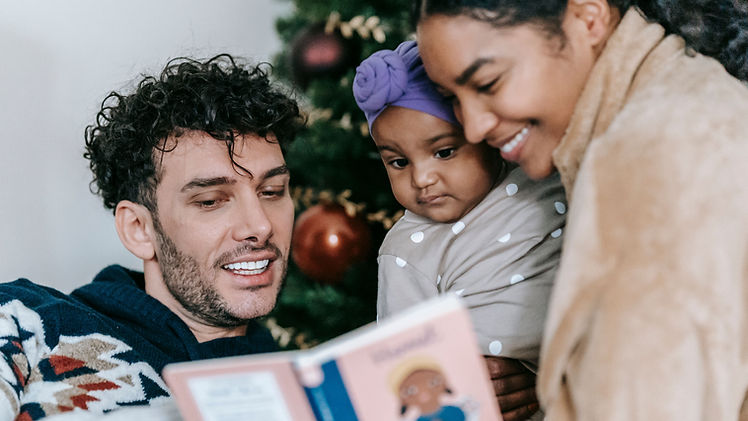
One of the most common worries in bilingual households is that two languages will confuse a baby or delay their speech. The evidence is reassuring on both counts: bilingual infants do not get confused, and any delay in single-word milestones is small and temporary. The longer-term picture is one of genuine cognitive and social advantage, a gift that, like most gifts, comes with a small, early cost.
Do two languages confuse a baby
Bilingual infants learn to separate their two languages from the earliest months, long before they speak. Research on infant brain activity shows they distinguish the sound patterns and rhythms of each language well before their first words. The idea that two languages tangle a baby's mind is a myth; the reality is that bilingual babies are doing a more complex version of what every baby does, and they manage it from the start.
Two languages do not confuse a baby. They give a baby two doors into the same world, and the brain handles both from the start.
The temporary price
Bilingual children may produce their first words slightly later, and their vocabulary in each individual language may be smaller than a monolingual child's single-language vocabulary for a time. But their combined vocabulary across both languages is typically equal or greater, and the gap in each language closes as they grow. The 'delay' is a feature of distributing learning across two systems, not a deficit.
- Bilingual infants separate their languages from the earliest months.
- Any single-language delay is small, temporary, and not a deficit.
- Combined vocabulary across both languages is typically equal or greater.
- Consistency helps, a language per parent, or a language per context, works well.
- Worried about a 'silent period'? It is common and usually resolves on its own.
How to raise a bilingual child
The most-studied approaches are consistent separation (one parent, one language) or a language tied to a context (home language vs. community language). What matters most is consistent, rich exposure in both languages, and a willingness to keep going through the periods when one language feels weaker. Reading, storytelling, and time with speakers of each language are the engines.


The minority language problem
The part of bilingual parenting that catches families off guard is the asymmetry: the community language gets stronger almost on its own, because it is everywhere, while the home or minority language fades unless it is deliberately fed. This is why so many bilingual children become 'receptive bilinguals': they understand the home language but answer in the community one. That is the predictable result of unequal input.
The research-backed response is to engineer the minority language's exposure rather than hope for balance. More books, more media, more regular time with fluent speakers, and, most powerfully, regular immersion in a place or community where only that language is spoken. The families who keep both languages active are almost always the ones who treated the minority language as something that needed feeding, not something that would hold its own. The effort is real, and so is the payoff.
- The community language grows on its own; the home language needs feeding.
- Receptive bilingualism (understanding without speaking) is common, not failure.
- Books, media, and fluent-speaker time are the minority language's fuel.
- Time immersed where only the minority language is spoken is the strongest lever.
The long-term picture
Beyond the early years, bilingualism is associated with cognitive advantages in executive function, the skills of attention, switching, and self-regulation, and, later in life, with a degree of protection against cognitive decline. The gift compounds. The early worry, for the large majority of families, turns out to have been the hardest part, and it passes.
References & further reading
Sources cited in this article. We link to peer-reviewed research and reputable guidance wherever possible.
- 1.
Byers-Heinlein, K., & Fennell, C. T. (2014). Bilingualism and cognitive development. Canadian Journal of Experimental Psychology.
- 2.
Pearson, B. Z., et al. (1993). The relation of input factors to lexical development in bilingual children. Journal of Child Language.
- 3.
Bialystok, E., et al. (2012). Bilingualism and the delay of Alzheimer's disease. Trends in Cognitive Sciences.
- 4.
De Houwer, A. (2009). Bilingual first language acquisition. Multilingual Matters.
Written by
MudLittle Contributor
MudLittle, LLC contributor