
Object Permanence: The Milestone That Changes Everything
Peekaboo teaches one of the most important ideas a baby ever builds: that things still exist when you can't see them.
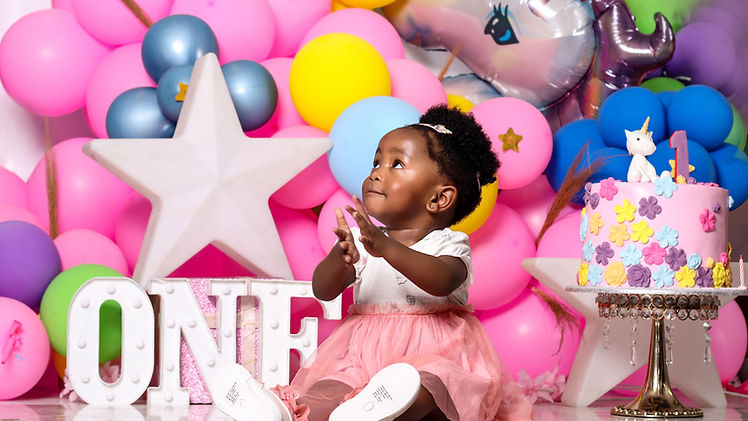
Peekaboo is universal for a reason. It is a game that happens to delight babies, and it is how they build one of the most important cognitive achievements of the first year: object permanence, the understanding that things (and people) continue to exist even when they are out of sight. It is the foundation of memory, anticipation, and the ability to miss someone.
What object permanence actually is
Before object permanence develops, a baby's world is, in a real sense, out of sight, out of mind. A dropped toy ceases to exist; a parent who leaves the room is gone. As the concept develops over the first year, the baby begins to hold the absent object in mind, to look for the dropped toy, to expect the hidden face to reappear, to be upset when a caregiver leaves because the caregiver is now known to exist elsewhere.
Peekaboo is the most useful game in the world. It is a baby learning that what they love still exists when it leaves, and comes back.
The stages
Object permanence develops in stages. In the early months, a baby may notice a partially hidden object. By around eight months, they will find a fully hidden one. By the end of the first year, they track where things are moved. Each stage is a deeper grasp that the world persists beyond the moment, and each one reshapes how the baby relates to people and things.
- Early months: a partially hidden object may be noticed.
- Around 8 months: a fully hidden object is found.
- By 12 months: the baby tracks where an object was moved.
- Separation anxiety rises as the baby learns that people exist when absent.
- Peekaboo and hide-the-toy are the perfect, age-appropriate teachers.
Why separation anxiety is its shadow
The same development that makes peekaboo fun also makes separation hard. Once a baby knows that you exist when you are gone, they can miss you, and protest your departure. Separation anxiety, which peaks around nine to twelve months, is the healthy counterpart of object permanence. The baby who cries when you leave is the baby who has learned, correctly, that you are a person who exists apart from them.
The games that build it

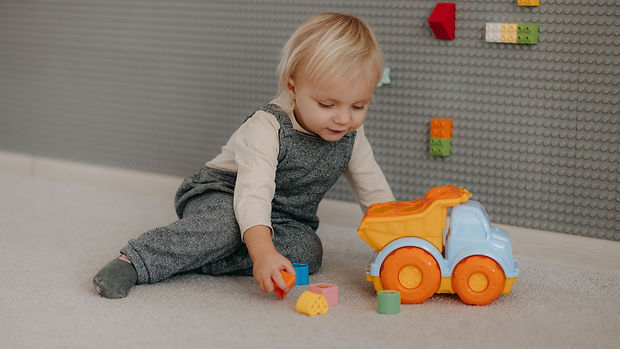
The beautiful thing about object permanence is that the activities that develop it are the ones babies already love, peekaboo, hide-the-toy, drop-the-spoon, and the slow, reliable return of a parent who steps out and comes back. None of these need to be taught; they are the natural curriculum of the first year, and a baby who is offered them in ordinary, everyday play is getting exactly the practice the concept needs.
The one piece worth being deliberate about is the return. Object permanence is built not by the disappearance but by the reliable reappearance, the lesson that what leaves comes back. A quick, consistent return when you step out, a peekaboo that always resolves, a game of hide-the-toy that always ends with the toy found: these reliable resolutions are what teach the baby that absence is temporary. The game is the hiding; the teaching is the finding.
- Peekaboo, drop-the-spoon, and hide-the-toy are the natural curriculum.
- The lesson is not the hiding but the reliable reappearance.
- A consistent return when you step out teaches that absence is temporary.
- Short, repeated separations with predictable returns build the trust to be left.
The practical upshot is that the games that feel like nothing (peekaboo, hide-the-toy, a quick game of 'where's the baby') are doing real cognitive work. And the difficult moments, the protest at drop-off, are the same development showing its other face. Both are signs of a mind building the idea that the world, and the people in it, persist.
References & further reading
Sources cited in this article. We link to peer-reviewed research and reputable guidance wherever possible.
- 1.
Piaget, J. (1954). The construction of reality in the child. Basic Books.
- 2.
Baillargeon, R. (1987). Object permanence in young infants. Cognition, 23(2), 85–110.
- 3.
Legerstee, M. (2005). Infants' sense of people. Cambridge University Press.
- 4.
Baillargeon, R., & DeVos, J. (1991). Object permanence in young infants. Child Development, 62(6), 1227–1246.
Written by
MudLittle Contributor
MudLittle, LLC contributor