
A Newborn Schedule That Actually Works
Forget the clock. The best newborn 'schedule' is a rhythm of feed, wake, sleep that follows your baby, not a grid on the fridge.
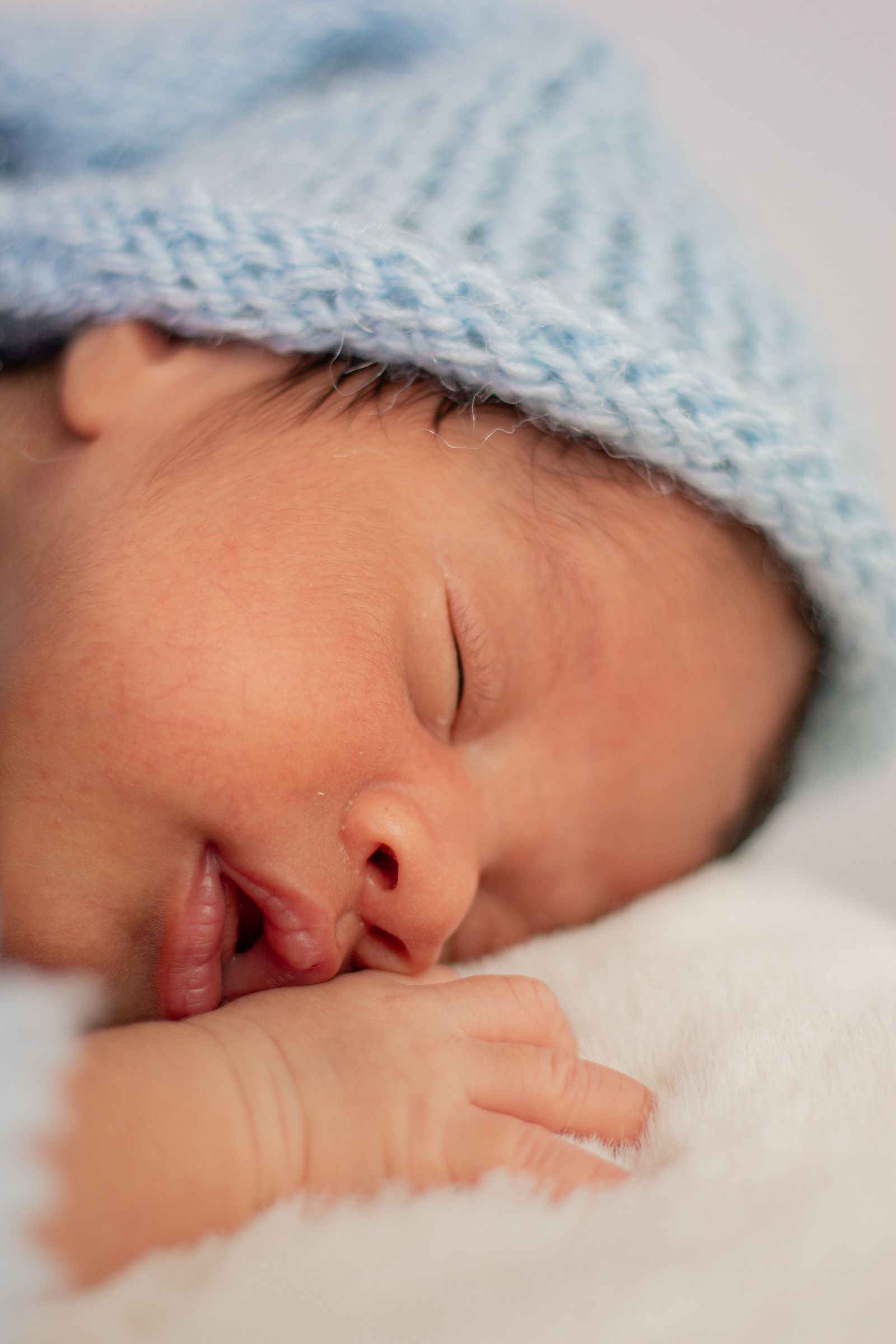
The most common newborn question is also the most misunderstood: when will they be on a schedule? The honest answer is that a newborn doesn't need a schedule, they need a rhythm. The difference matters.
Rhythm, not schedule
A schedule is a clock: feed at seven, nap at nine. A rhythm is a sequence: feed, a little awake time, sleep, repeat. Newborns can't tell time, but their bodies run on a predictable loop. Following that loop, rather than fighting it, is what eventually becomes a schedule on its own.
You can't impose a schedule on a newborn. You can build a rhythm that becomes one.
The eat-play-sleep loop
The simplest frame is eat, then a short awake window, then sleep, keeping feeding out of the sleeping part so a baby learns to sleep without needing to be fed to sleep. In the first weeks the awake window is tiny, sometimes forty minutes, and that's normal.
- Watch the awake window, not the clock, overtired is the enemy of sleep.
- A short awake window is normal; don't try to keep them up for 'a real nap.'
- Start the wind-down before the yawn; yawning is already late.
- The same order every time is what eventually becomes a schedule.
Around three to four months, the rhythm you've been building starts to organize itself into something that looks like a schedule, because the baby, not the fridge, has been setting the pace all along.
Reading the awake window
The single most useful skill in the newborn weeks is reading the awake window, the narrow band of time a baby can be awake before overtiredness makes sleep impossible. In the first weeks it can be as short as 30 to 45 minutes, and it grows by only a few minutes at a time. Most newborn sleep problems are not sleep problems at all; they are an awake window that was pushed ten minutes too long.
The early cues are quiet and easy to miss: a slight glaze over the eyes, a turn away from your face, small fussiness that has no other cause. The yawn and the rub are already late signals, and the full cry means the window has closed. Catching the quiet early cues is the difference between a baby who goes down easily and one who fights every nap, and it is a skill that compounds, because a well-rested baby shows clearer cues than an overtired one.
- Newborn awake windows start as short as 30–45 minutes and grow slowly.
- Early cues are quiet: a glaze, a turn away, a small fuss with no other cause.
- Yawning and rubbing are already late; a full cry means the window has closed.
- A well-rested baby shows clearer cues, the skill compounds over weeks.
- When in doubt, put them down earlier; almost no one errs on the early side.
References & further reading
Sources cited in this article. We link to peer-reviewed research and reputable guidance wherever possible.
- 1.
Bartick, M., et al. (2017). Feeding practices during the first 6 months and infant sleep. Pediatrics.
- 2.
Mindell, J. A., et al. (2015). Bedtime routines as a family-level process. Sleep Medicine Reviews.
- 3.
Hiscock, H., et al. (2014). Preventing early infant sleep and crying problems. Pediatrics.
- 4.
Weissbluth, M. (2015). Healthy sleep habits, happy child. Ballantine Books.
Written by
MudLittle Contributor
MudLittle, LLC contributor