
Your Pregnancy Brain: What's Real and What's Hype
Forgetfulness, vivid dreams, and a rewired sense of smell, pregnancy changes the brain. The science is fascinating, and far less alarming than it sounds.
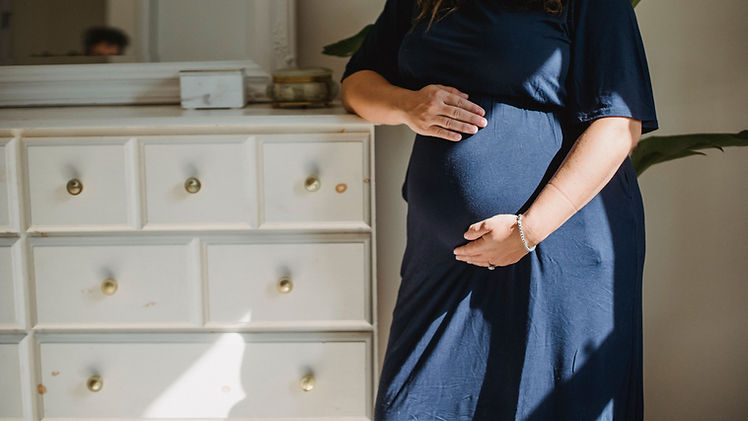
'Pregnancy brain', the foggy, forgetful, distracted state many people describe, is widely dismissed as an excuse, and widely experienced as very real. The truth, as so often, sits in between. Pregnancy does change the brain, structurally and functionally, and those changes are not a defect. They appear to be part of how a body prepares to care for a new person.
What the scans actually show
MRI studies of pregnant brains find reductions in gray matter in regions involved in social cognition, the networks we use to interpret other people's intentions and emotions. Far from being loss, this looks like pruning: streamlining the circuitry a parent will need to read their baby. These changes persist for at least two years and predict stronger attachment behavior after birth.
Pregnancy brain is your mind remodeling itself for the work ahead.
The senses, rewired
The heightened sense of smell many pregnant people notice is real, and it is thought to be tied to the same hormonal shifts that drive nausea, an early-warning system for a vulnerable body. Vivid dreams, too, are common and reflect the combination of disrupted sleep architecture and a mind processing an enormous life transition.
- Gray matter changes in social-cognition regions, a remodeling, not a loss.
- Heightened smell is real and likely tied to the same system as nausea.
- Vivid dreams reflect disrupted sleep plus emotional processing.
- Forgetfulness is real but modest, and worsened by poor sleep, not pregnancy alone.
What to do about it
The practical answer is to stop treating pregnancy brain as a personal failing. Offload what you can to lists and reminders, protect your sleep as much as the bladder allows, and trust that the fogginess is doing something useful underneath. The same brain that feels scattered is getting better at the one task that will matter most: reading your baby.

The remodeling does not stop at birth
One of the more striking findings of the recent research is that the brain changes of pregnancy are not a sealed chapter at delivery. The same regions that pruned during pregnancy continue to recalibrate across the first postpartum year, and the degree of change tracks with how much hands-on care a parent provides, meaning that the work of caregiving itself shapes the brain, not hormones alone. Adoptive parents show parallel, if smaller, changes.
This reframes the postpartum fog, too. The forgetfulness that lingers after birth is the same remodeling continuing to tune a parent to their particular child. Knowing this does not make the lost keys less annoying, but it does place them in a story of adaptation rather than decline. The brain that feels scattered is, in the background, getting remarkably good at one specific, irreplaceable job.
- Brain changes continue through the first postpartum year, long after pregnancy ends.
- The degree of change tracks with hands-on care, the brain is shaped by doing.
- Adoptive parents show parallel changes, confirming that care itself drives the change.
- Postpartum forgetfulness is the same remodeling, not a permanent deficit.
If the forgetfulness crosses into genuine confusion, disorientation, or severe low mood, that is a different conversation, mention it to your provider. Ordinary scatter is normal. Anything that feels alarming is worth a call.
References & further reading
Sources cited in this article. We link to peer-reviewed research and reputable guidance wherever possible.
- 1.
Hoekzema, E., et al. (2017). Pregnancy leads to long-lasting changes in human brain structure. Nature Neuroscience, 20(2), 226–231.
- 2.
Barba-Müller, E., et al. (2019). Brain adaptation to pregnancy: mapping the longitudinal trajectory of structural brain changes. NeuroImage, 197, 30–41.
- 3.
Christian, L. M., & Iams, J. D. (2014). Sleep and mood in pregnancy. Sleep Medicine Clinics.
- 4.
Kim, P., et al. (2010). The plasticity of postpartum brain: how a parent's brain changes. Current Directions in Psychological Science, 19(4), 227–232.
Written by
MudLittle Contributor
MudLittle, LLC contributor